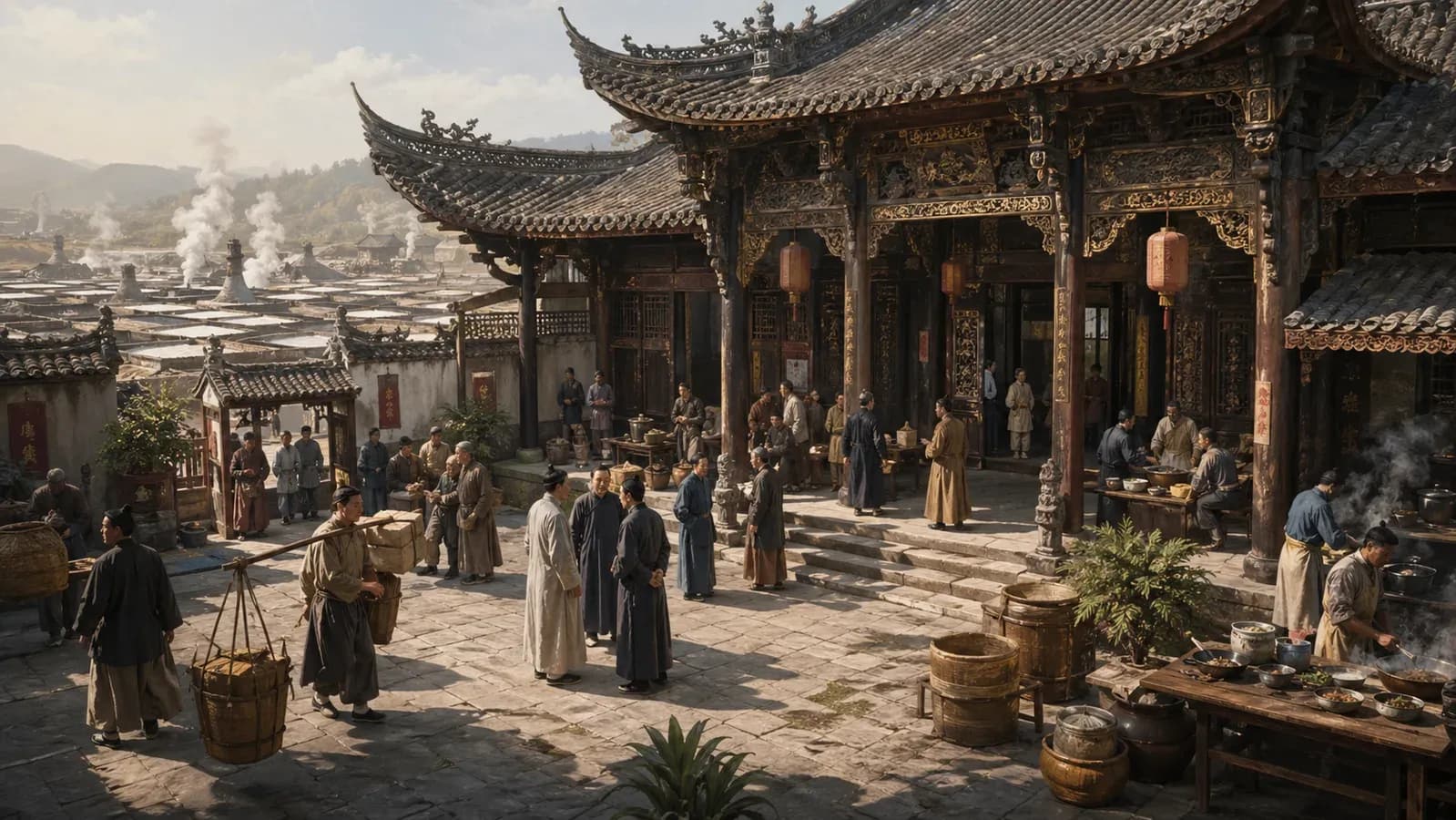
Two thousand years of salt civilization and artisanal heritage, deeply analyzing the soul of Salt-Industry cuisine.
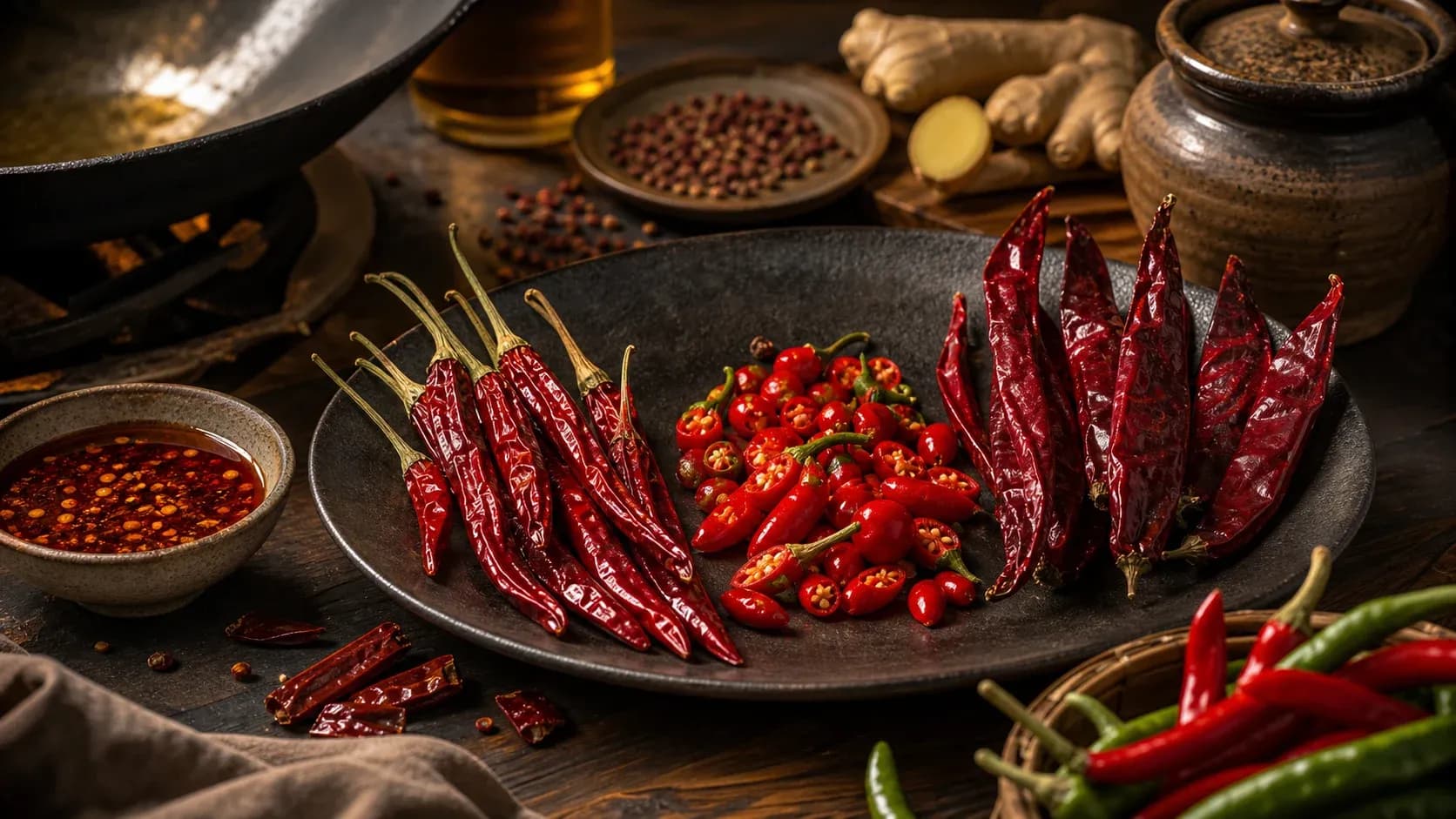
Exploring the distinct culinary roles of Erjingtiao, Xiaomila, and Chaotianjiao in Sichuan and Zigong Yanbang cuisines, focusing on aroma, spiciness, and their applications in fresh and dried forms.
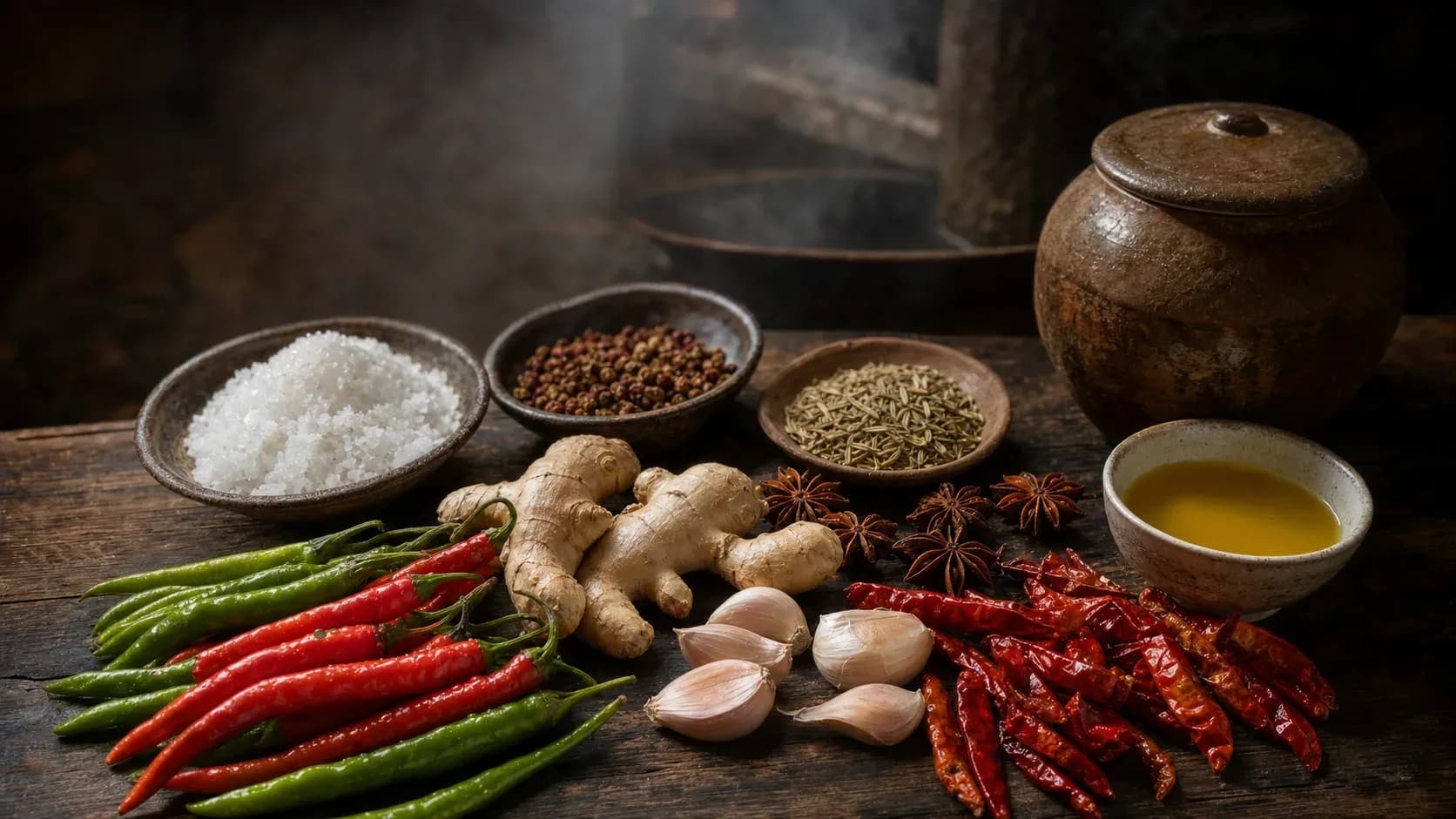
From well salt, fresh chili and young ginger to pickle jars, Sichuan pepper, dried chili, and rapeseed-oil temperature, this article outlines the layered spice logic of Zigong Salt-Industry cuisine.
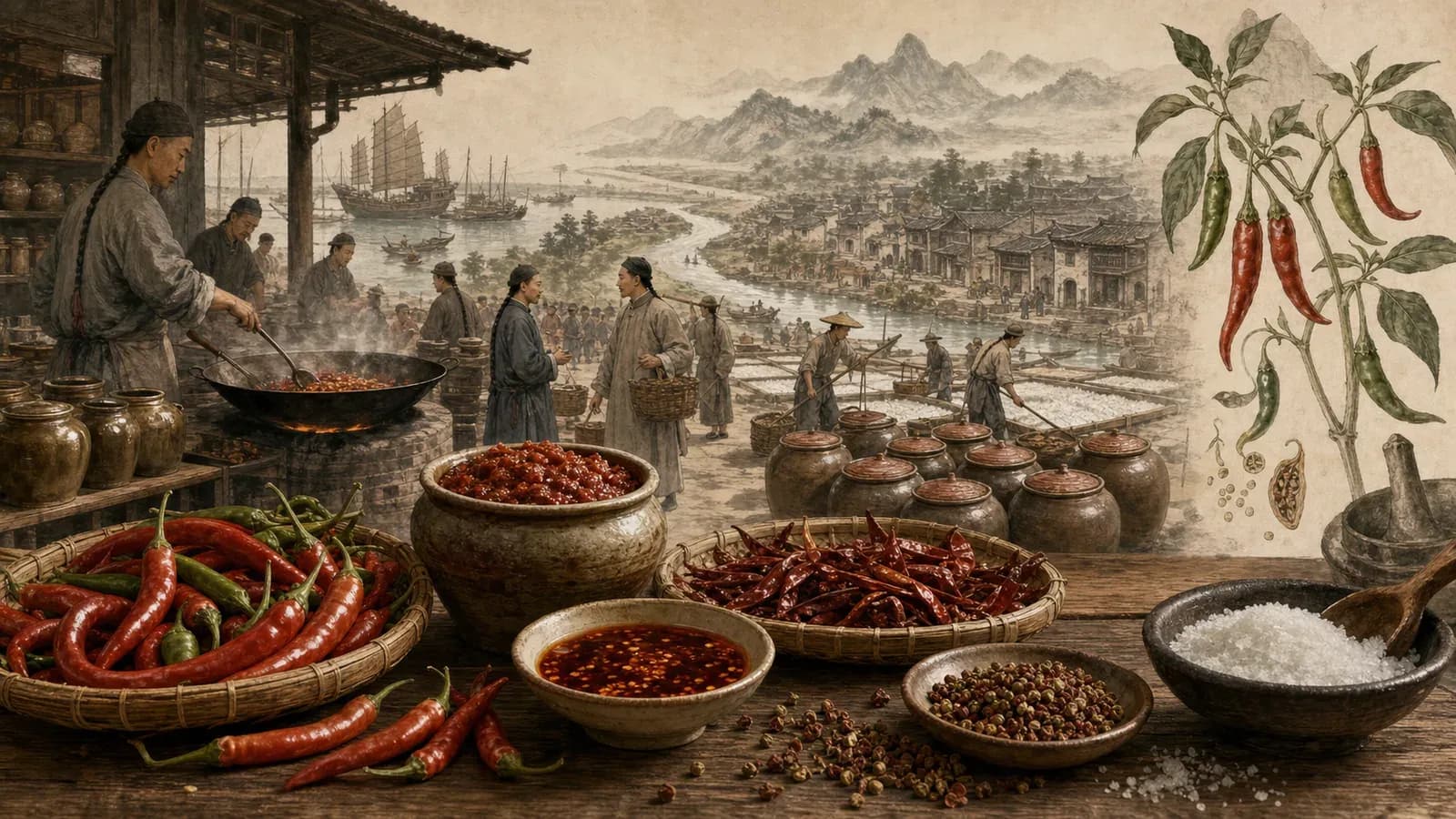
From the arrival of the American chili pepper in late Ming China to Qing local gazetteers, migration, salt routes, and the formation of Sichuan, Hunan, Guizhou, and Yunnan flavor systems.
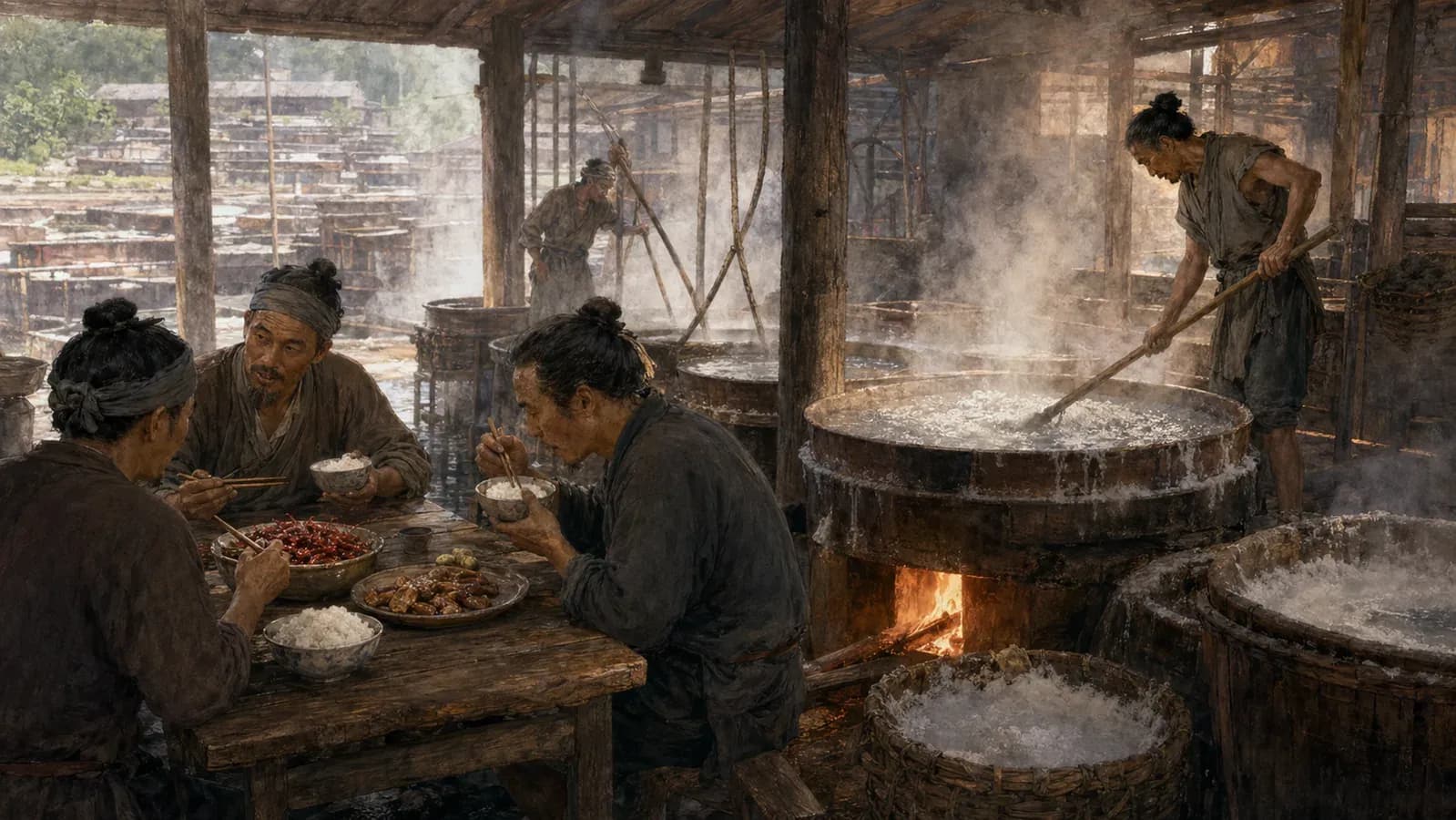
Starting from Zigong well-salt production, salt-worker trades, and the Salt-Industry table, this article explains how long labor settled into a fresh, spicy, and deeply savory local flavor.
Starting from Zigong guild halls, migrant merchant groups, and well-salt trade, this article explains how guild-hall cooking helped Salt-Industry cuisine become open, rich, and locally distinct.
Starting from Zigong well-salt production, salt-worker labor, and home cooking, this article explains why salt-worker food became thick, fresh, spicy, and especially good with rice.