


Extreme Heat: The Art of Just-Cooked Flash Frying
In the cooking philosophy of Zigong Salt-Industry cuisine, speed and freshness are closely linked. If seasoning gives a dish its voice, heat control decides whether that voice stays alive. In the hands of a Zigong cook, high-heat flash frying is not only a technique. It is a test of timing measured in seconds.
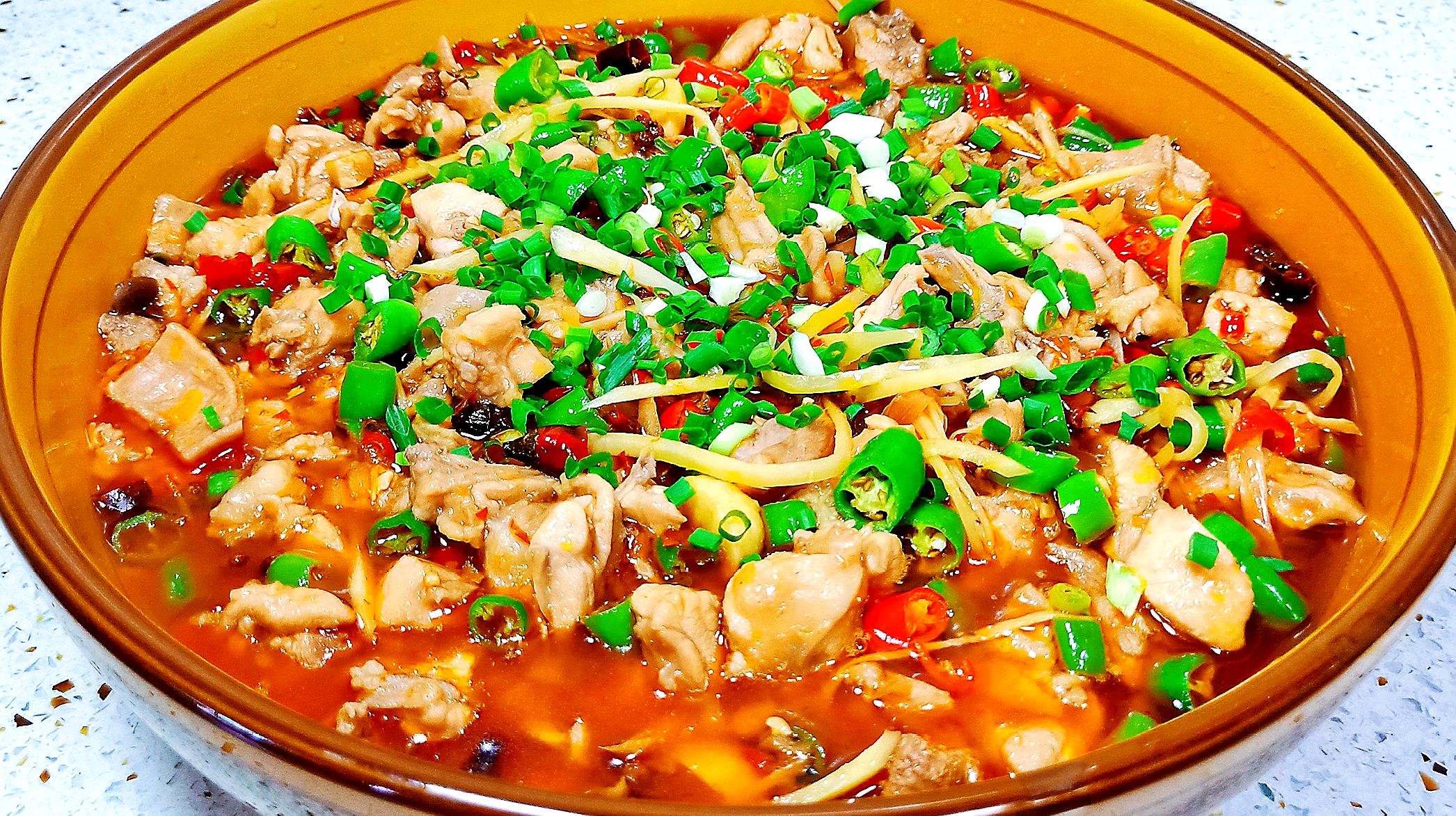 Golden-edged meat, young ginger, and green er jing tiao chili show the fresh look that high heat tries to preserve.
The Core Question: What Does "Just Cooked" Mean?
In Zigong cooking, duan sheng is one of the most important and difficult ideas. It means the critical moment when an ingredient has crossed from raw to cooked.
When meat meets very hot oil, the surface proteins set quickly and help retain moisture. In an ideal just-cooked state, the outside has already taken on wok aroma, while the inside still feels juicy, springy, and fresh.
For dishes such as Qiaotou Sannen or Fresh Pot Rabbit, actual frying time is often counted in seconds. A small delay can make the meat lose the crisp, tender, lively texture that defines the dish.
Technique: Flash Frying and Huo Du
Zigong Salt-Industry cuisine developed several methods for working with intense heat:
- Flash frying: This is often used for offal, including kidney, liver, and tripe. The oil temperature must be high, and the ingredient should cook almost as soon as it enters the wok. The key is how heat reshapes the surface quickly.
- Huo du: This brief boiling or liquid-crossing technique uses temperature difference to keep meat springy. By adding liquid at the right moment, the cook changes the heat flow inside the wok so small meat pieces or slices cook through while keeping a lively bounce.
 High-heat flash frying.
Young Ginger, Fresh Chili, and Aroma Chemistry
In high-heat frying, the young ginger and fresh chili favored by Zigong cooks act like aromatic catalysts.
Young ginger brings water, sharpness, and a clean green fragrance. Fresh chili gives direct heat and brightness. Under strong heat, they combine with the ingredient's own aroma to create the Salt-Industry profile often described as fresh heat without dryness and fragrance that reaches into the meat. This flavor depends on speed. Only short cooking can keep the color bright and the texture layered.
References and Further Reading
- Why Zigong Salt-Industry Cuisine Stands Apart - The Paper
- What Gives Salt-Industry Cuisine Its Tongue-Exploding Appeal - West China City Daily
Conclusion: Craft in an Industrial Age
Even in modern production, Lafeitu still pays close attention to the older logic of heat control. Each batch of seasoning base and each selection of raw materials tries to retain the beauty of that brief just-cooked moment. Respecting heat is one way to preserve the local Zigong flavor that has been carried forward through generations.